



Pop Theory 101: A Practical Music Theory Curriculum for Singers
Help your students understand the music they sing with a step-by-step music theory curriculum designed specifically for voice lessons.
Pop Theory 101 is part of the Confident Musician Series: a collection of practical musicianship curricula that help students become more confident, independent musicians. Unlike traditional music theory programs that focus heavily on notation and academic concepts, this music theory curriculum teaches the skills singers actually use in rehearsals, performances, worship teams, auditions, and lessons.
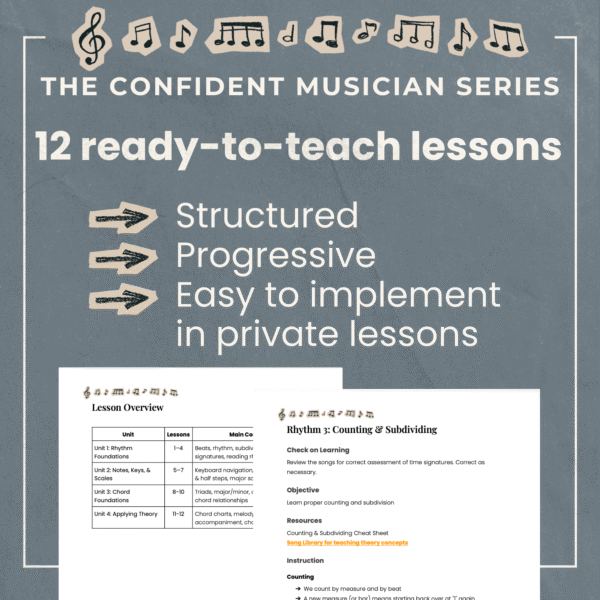
Through 12 structured lessons, students learn how rhythm, scales, keys, chords, and chord charts work together so they can communicate more effectively with other musicians, learn music faster, and develop greater musical independence.
Music Theory Curriculum Overview
Unit 1: Rhythm Foundations
Students learn:
- Beats and note values
- Measures and bar lines
- Time signatures
- Counting and subdivision
- Rhythm notation in chord charts
Unit 2: Notes, Scales & Keys
Students learn:
- Keyboard navigation
- Note names
- Sharps and flats
- Whole and half steps
- Major scales
- Understanding keys
Unit 3: Chord Foundations
Students learn:
- Chord construction
- Major and minor chords
- Chord formulas
- Chord relationships
- Practical chord identification
Unit 4: Applying Music Theory
Students learn:
- Reading chord charts
- Understanding melody within a key
- Basic accompaniment skills
- Applying theory concepts to real songs
Who This Music Theory Curriculum Is For
This curriculum is ideal for:
- Voice teachers
- Beginning voice students
- Intermediate singers with little theory knowledge
- Worship singers and worship leaders
- Singer-songwriters
- Contemporary commercial music students
No previous music theory experience is required. Students do not need piano experience, sight-reading skills, or formal ear training to be successful with this curriculum.
Why Voice Teachers Choose Pop Theory 101
Many music theory resources were created for classroom settings or instrumental programs, but Pop Theory 101 was created specifically for singers. The lessons focus on the theory concepts singers encounter most often while avoiding unnecessary complexity that can overwhelm beginners, and teachers can easily incorporate the curriculum into weekly lessons.
Whether you’re introducing theory for the first time or looking for a structured music theory curriculum to use in your studio, Pop Theory 101 provides a clear path toward stronger musicianship and greater independence.


Reviews
There are no reviews yet.